Lamoille Restorative Center
April 1 2024
The Lamoille Restorative Center (LRC) sought to advance its commitment to equity, diversity, and inclusion by addressing internal cultural gaps, building staff capacity, and strengthening connections with marginalized communities. Challenges included a lack of clarity around equity initiatives, inconsistent representation of underrepresented groups in decision-making, and a need for deeper staff and volunteer engagement with racial and social justice principles. LRC also identified the opportunity to serve as a regional leader in equity work, leveraging its role at the intersection of education, justice, and social services.
In the first year, TCDG focused on community engagement and conducting a comprehensive Equity Assessment. This involved surveys, focus groups, and interviews with diverse stakeholders to evaluate LRC’s culture and practices, complemented by a review of internal documents to identify alignment with equity goals. The findings from this assessment informed subsequent years of work.
Building on this foundation, TCDG focused on education and training while providing additional support to LRC’s Racial Equity Group (REG). Interactive workshops for staff, volunteers, board members, and community partners addressed topics such as LGBTQ+ inclusion, white supremacy culture, systemic oppression, and active bystander intervention. These sessions equipped participants with the tools and confidence to address equity issues and practice authentic, inclusive language.
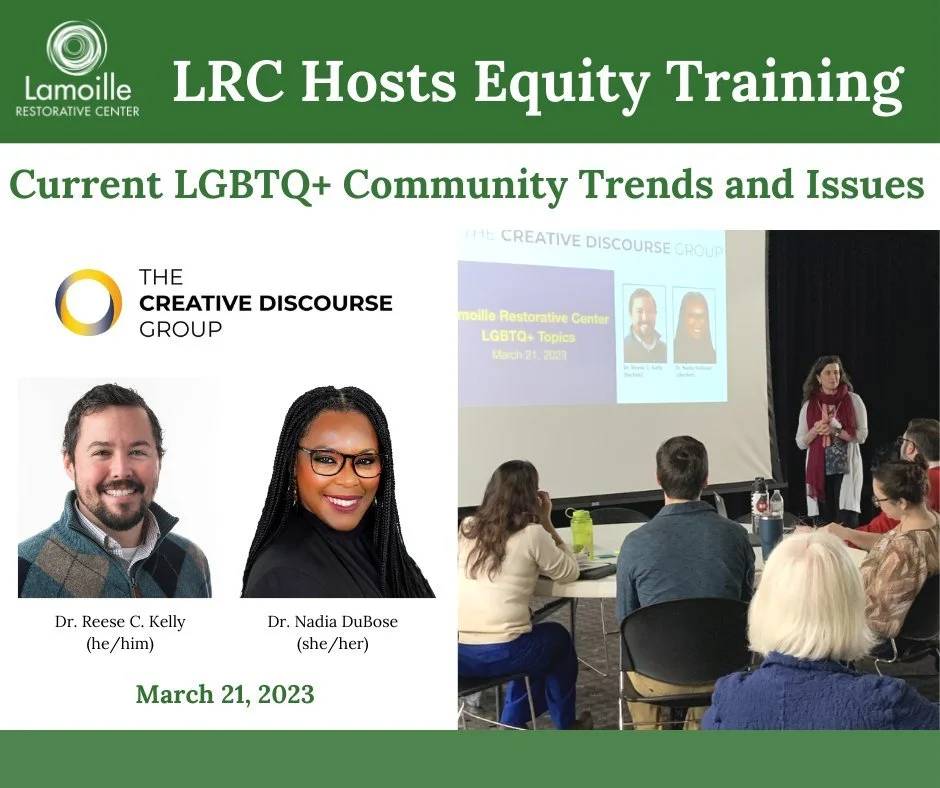
About 60 health care providers, educators, and human services professionals came together to learn more about creating inclusive and safe services for members of our community who identify as LGBTQ+.
The initiative catalyzed a cultural and organizational shift within LRC and its broader community. Staff, board, and volunteers gained tools and strategies to incorporate equity into daily operations, fostering a more inclusive workplace and service environment. By leveraging its unique position at the intersection of critical systems, LRC emerged as a regional equity leader, fostering partnerships to address systemic inequities collaboratively. Additionally, the work established clear priorities and action plans for continued learning, policy development, and community-driven equity initiatives.
This initiative positioned LRC to continue advancing its mission to create equitable and just outcomes for all community members, particularly those from marginalized groups. The foundation laid through this partnership supports LRC’s vision of long-term, transformative change in Lamoille County and beyond.
“I want to extend a huge thank you following your most recent workshop. “Incredible,” “engaging, dynamic and fantastic” are a few of the words people used to describe their experience.”